
Stable Surfaces Built for Sun and Water
Concrete Pool Decks & Decorative Concrete in Delphos for surfaces that stay level, resist cracking, and handle freeze-thaw cycles without lifting or sinking
Red Sea Pools installs and refinishes concrete pool decks across Delphos, building surfaces designed to handle constant moisture, foot traffic, and seasonal temperature swings. You get a stable perimeter around your pool that drains properly, resists slip hazards, and holds up under direct sunlight without fading or warping. Whether you are replacing a cracked slab or adding decorative finishes to an existing deck, the work addresses both structural integrity and surface appearance.
A new pool deck starts with excavation and base preparation, followed by forming, rebar placement, and pouring. Stamped and stained finishes are applied while the concrete is still workable, creating patterns that resemble stone, tile, or wood without the maintenance those materials require. Slip-resistant coatings are added to reduce surface traction loss when wet, and concrete overlays are used to resurface worn or damaged decks without full replacement. Custom patterns and textures are pressed into the surface using mats and tools, then sealed to lock in color and protect against chlorine, UV exposure, and winter moisture.
If your pool deck is uneven, cracking at the joints, or showing surface wear, schedule an evaluation to determine whether resurfacing or replacement makes sense for your setup.
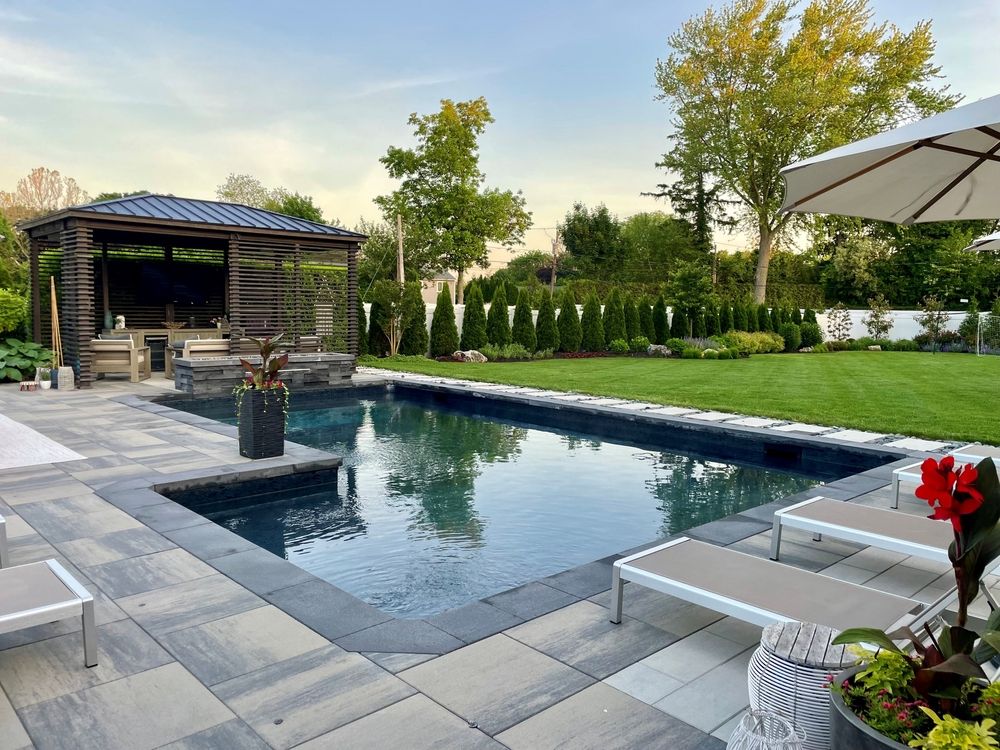
How Decorative Concrete Changes After Installation
Once the deck is poured and finished, you will notice the surface stays cool underfoot compared to darker materials, drains water toward the yard instead of pooling near the coping, and maintains traction even when wet. Stamped patterns hold their definition for years when properly sealed, and stained finishes develop a consistent tone that does not fade in patches or streaks. The deck becomes easier to clean because the sealed surface resists algae growth and does not absorb pool chemicals or oils.
Red Sea Pools applies sealant after the concrete cures, creating a barrier that prevents water infiltration and reduces freeze-thaw damage during Ohio winters. You will also see expansion joints placed at regular intervals to allow the slab to shift slightly without cracking, and the surface is sloped away from the pool to direct runoff toward landscaped areas or drains. If your deck includes walkways or extensions, those sections are poured with the same finish and slope to maintain continuity.
Concrete resurfacing is used when the existing slab is structurally sound but the surface is stained, spalled, or rough. A thin overlay is bonded to the old concrete, then stamped or stained to match the rest of the deck. This process takes less time than full replacement and avoids the cost of removing and disposing of the old slab. Not all decks qualify for resurfacing, especially if the base has settled or the slab has deep cracks that indicate movement underneath.
What to Know About Pool Deck Materials and Timing
Homeowners in Delphos often ask how decorative concrete compares to pavers, how long the surface takes to cure, and whether the deck can be installed in sections. The answers depend on your site conditions, budget, and how soon you need the area ready for use.
What is the difference between stamped concrete and pavers for a pool deck?
Stamped concrete is poured as a single slab with patterns pressed into the surface, while pavers are individual units set on a sand or gravel base. Concrete stays flatter over time and does not shift or settle like pavers, but pavers allow for easier spot repairs if one section is damaged.
How long does a new concrete deck take to cure before you can use it?
The surface is walkable within 24 to 48 hours, but full curing takes about 28 days. You can use the pool during that time, but avoid dragging heavy furniture or placing concentrated weight on the deck until the concrete reaches full strength.
Why does the deck need a slip-resistant coating if the surface is already textured?
Stamped patterns add some traction, but a slip-resistant coating increases surface grip when wet, especially around steps, ladders, and shallow-end entries where water is constantly present. The coating is rolled or sprayed onto the sealed surface and bonds to the top layer.
When should you resurface a deck instead of replacing it?
Resurfacing works when the slab is level, the base is stable, and the only issues are surface stains, minor spalling, or worn finishes. If the deck has settled, cracked through the full thickness, or shows signs of base erosion, replacement is the better option.
What happens to concrete pool decks during winter in Delphos?
Freeze-thaw cycles cause water trapped in the concrete to expand, which can lead to cracking or spalling if the surface is not properly sealed. Red Sea Pools applies penetrating sealers that prevent water absorption and reapply as needed to maintain protection.
If you are planning a new deck or need to address cracking, uneven sections, or surface wear, contact Red Sea Pools to assess your slab and discuss finish options that match your pool layout and drainage needs.